

October26
7 Steps to Clean Tarnished Religious Jewelry at Home
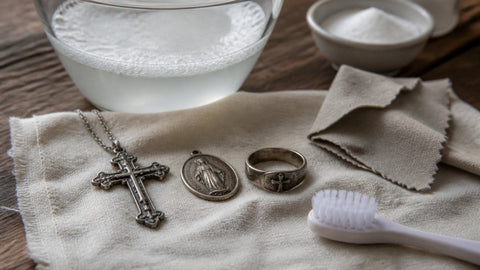
Last Updated: October 26, 2026
Quick Summary
To clean tarnished religious jewelry at home, use a gentle vinegar solution made from one part white vinegar and two parts water, soak the piece briefly, and dry immediately with a soft cloth. Avoid harsh commercial dips, ultrasonic cleaners, and abrasive methods that can damage delicate finishes, gemstones, and engraved details.
- Combine one part white vinegar with two parts water for a safe cleaning solution
- Never scrub hard or use aggressive motions when cleaning tarnished religious jewelry
- Dry immediately with a clean soft cloth rather than letting pieces air dry
- Avoid commercial silver dips, ultrasonic cleaners, toothpaste, and steel wool
- Stop cleaning and seek professional help if gemstones feel loose or enamel is cracking
Table of Contents
- Why Religious Jewelry Needs Special Care
- Understanding Tarnish, Rust, and Corrosion on Religious Pieces
- How to Clean Sterling Silver Jewelry with Gentle Methods
- How to Clean Silver-Plated Jewelry Without Damaging the Coating
- Step-by-Step: Cleaning Tarnished Religious Jewelry at Home
- Choosing a Jewelry Cleaning Cloth for Silver
- What Not to Use to Clean Jewelry
- Protecting Your Religious Jewelry: Prevention and Storage
- Frequently Asked Questions
Religious jewelry holds deep personal meaning. Whether it's a CTR ring, a temple necklace, or a Christus pendant, these pieces deserve care that honors their significance. Tarnish builds up naturally on silver and copper over time, but the good news is that you can restore shine and brilliance right at home using gentle methods that protect delicate finishes, gemstones, and engraved details.
This guide walks you through everything you need to know about cleaning tarnished religious jewelry safely, from identifying what's actually on your piece to choosing the right cleaning method for sterling silver, silver-plated, or mixed-material pieces.
Why Religious Jewelry Needs Special Care
A CTR ring might have fine scroll lettering.
Understanding Tarnish, Rust, and Corrosion on Religious Pieces
Rust and corrosion are different. Rust appears as reddish-brown discoloration and happens when iron or steel components oxidize. Corrosion is similar but can occur on various metals. Both are more serious than tarnish because they're eating into the metal itself, not just sitting on the surface.
What causes tarnish on silver and copper
Factors that speed up tarnishing include:
- Wearing the piece while exercising or swimming
- Storing it in humid conditions
- Keeping it in a plastic bag (traps moisture)
- Exposure to perfume, lotion, or cosmetics
- Contact with rubber or certain fabrics
When to stop cleaning and seek professional help
Stop cleaning immediately if you notice:
- Gemstones that feel loose or rattle inside their settings
- Enamel that's cracking, peeling, or lifting
- A glued stone that's separating from the metal
- Deep scratches, dents, or bent prongs
- Pitting or corrosion that's eating into the metal surface
How to Clean Sterling Silver Jewelry with Gentle Methods
This method is safe for pieces with gemstones, enamel, or delicate finishes. It cleans without stripping or damaging anything.
How to Clean Silver-Plated Jewelry Without Damaging the Coating
For pieces like the Temple Wedding Ring Ladies 783 Sterling Silver, which may have plated details, this gentle approach ensures the finish stays intact for years.
Step-by-Step: Cleaning Tarnished Religious Jewelry at Home
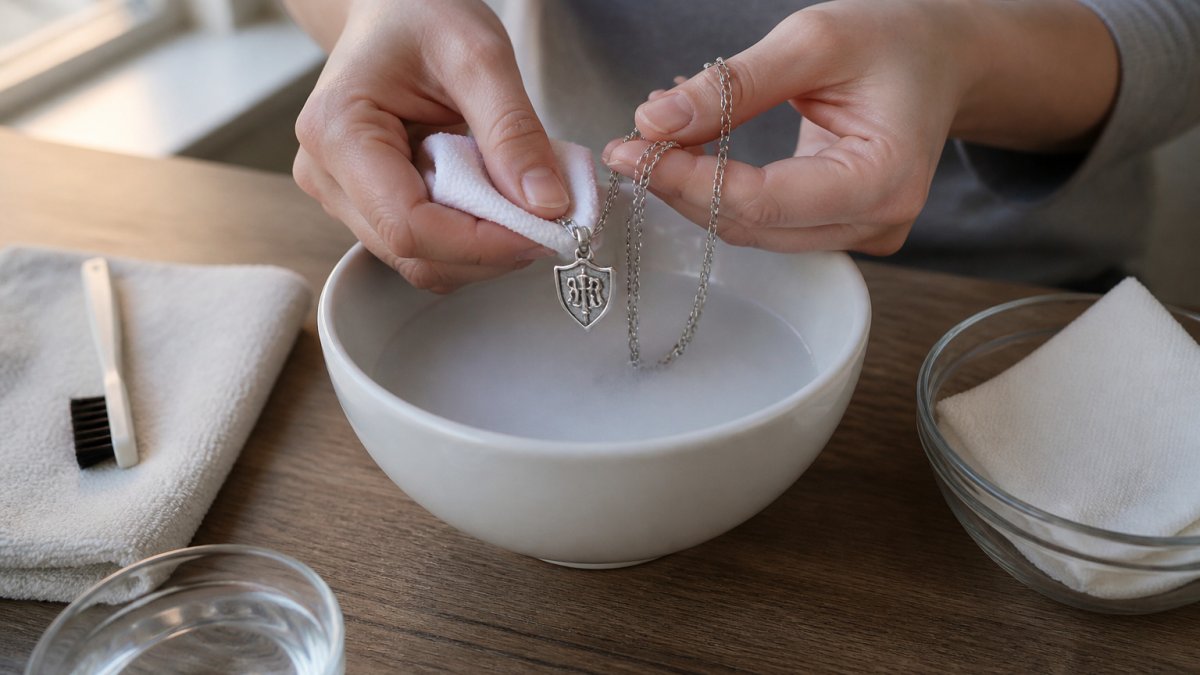
Step 1: Assess materials and remove components
If your piece has pearls or gemstones that are glued rather than set with prongs, be extra cautious. These components don't tolerate soaking well.
Step 2: Choose your cleaning method
Avoid commercial silver dips, especially for religious jewelry. These are harsh chemicals that can damage finishes and loosen components.
Christus Necklace Sterling Silver #744 →
Step 3: Prepare your cleaning solution
For vinegar solution, combine one part white vinegar with two parts water in a small bowl.
Step 4: Soak and gently clean
Never scrub hard or use aggressive back-and-forth motions. Gentle, patient work removes tarnish without damaging the piece.
Step 5: Rinse thoroughly and dry
Dry immediately with a clean, soft cloth. Don't let the piece air dry. Pat it dry gently, then use the cloth to buff away any remaining moisture.
Step 6: Polish with the right cloth
For pieces like the Christus Necklace Sterling Silver #744, the frosted finish is intentional. Gentle cleaning with soap and water followed by soft drying is all you need.

Choosing a Jewelry Cleaning Cloth for Silver
Many people keep a dedicated cloth just for their religious jewelry. This prevents cross-contamination from other items and keeps the cloth clean.
What Not to Use to Clean Jewelry
Certain methods and products will damage your religious jewelry. Avoid these:
- Toothpaste: Too abrasive, even the gentle varieties. It scratches silver and can damage frosted finishes.
- Harsh chemical dips: Commercial silver cleaning solutions are strong enough to strip protective coatings and loosen components.
- Ultrasonic cleaners: The vibrations can loosen glued gemstones and damage delicate details. They're not worth the risk for pieces with sentimental value.
- Chlorine bleach: Extremely damaging to silver. Never use it.
- Aluminum foil and baking soda (the electrochemical method): While this method works for some silver, it can damage frosted finishes and is too aggressive for delicate religious pieces.
- Steel wool or abrasive scrubbing pads: These scratch silver permanently.
- Hot water: Warm is fine, but hot water can loosen glued components and damage enamel.
- Rubbing alcohol: Can damage enamel and loosen glued stones.
Several common cleaning methods and products will damage religious jewelry and should be avoided.
| Method or Product | Why to Avoid | Damage Risk |
|---|---|---|
| Toothpaste | Too abrasive even in gentle varieties | Scratches silver, damages frosted finishes |
| Commercial silver dips | Harsh chemicals strip coatings | Loosens components, damages finishes |
| Ultrasonic cleaners | Vibrations loosen delicate parts | Loosens glued gemstones, damages details |
| Chlorine bleach | Extremely damaging to silver | Severe corrosion and discoloration |
| Steel wool or abrasive pads | Creates permanent surface damage | Scratches silver irreversibly |
| Hot water | Loosens components and finishes | Damages enamel, loosens glued stones |
| Rubbing alcohol | Dissolves protective coatings | Damages enamel, loosens glued stones |
Protecting Your Religious Jewelry: Prevention and Storage
Check your pieces every few months. Early tarnish is easier to clean than heavy buildup. A quick gentle wipe with a soft cloth takes just a minute and keeps your jewelry looking fresh.
Frequently Asked Questions
What's the safest way to remove tarnish from a religious pendant or ring without damaging the finish?
Start by identifying the metal: sterling silver, silver-plated, or copper. For sterling silver, a warm water and mild dish soap soak followed by gentle brushing with a soft cloth works well. For silver-plated pieces, avoid soaking and instead use a polishing cloth to gently restore shine. Always test on a small area first if your piece has enamel, gemstones, or glued components. If unsure, professional cleaning is safer than risking damage to meaningful pieces.
Can I use vinegar and baking soda to clean how to clean sterling silver jewelry safely?
Yes, but with caution. A paste of baking soda and water, or a soak in white vinegar diluted with water, can remove tarnish from solid sterling silver. However, avoid these methods on silver-plated pieces, as they can wear through the plating. Never use these on jewelry with enamel, pearls, or glued stones. Test on a small area first, and always rinse thoroughly and dry immediately to prevent water spots.
What household items should I avoid when cleaning tarnished religious jewelry?
Never use abrasive scrubbers like steel wool or harsh scouring pads, as they scratch the metal surface. Avoid bleach, ammonia, and harsh chemical cleaners, which can corrode metal and damage finishes. Don't soak pieces with gemstones, pearls, or enamel in water for extended periods. Skip toothpaste and baking soda on delicate or plated pieces. When in doubt, use only soft cloths, mild dish soap, and lukewarm water.
How often should I clean my religious jewelry to prevent heavy tarnish buildup?
Regular gentle cleaning extends the time between deep cleanings. Wipe your piece with a soft cloth after wearing to remove skin oils and moisture. Store jewelry in airtight containers or sealed bags to slow tarnish formation. A full cleaning every 3-6 months, depending on wear and storage conditions, keeps pieces looking fresh. Daily-wear items like CTR rings may need more frequent attention than pieces worn occasionally.
Keeping your religious jewelry clean and beautiful is a way of honoring what it represents. Whether you're maintaining a piece you wear daily or caring for something passed down through your family, the gentle methods in this guide will preserve your jewelry safely. Celestial Ringdom pieces are designed to last a lifetime with proper care. Start with warm water and mild soap, be patient with stubborn tarnish, and your religious jewelry will continue to shine as a meaningful symbol of your faith.
