

October18
How to Choose Durable Baptism Jewelry: A Step-by-Step Guide
Table of Contents
- Understanding Durable Baptism Jewelry Materials
- Selecting the Right Religious Symbol and Style
- Choosing a Baptism Necklace Gift That Stands the Test of Time
- Baptism Jewelry for Babies: Safety and Sizing
- Inspecting Construction Quality and Clasp Security
- Long-Term Care and Storage to Preserve Your Keepsake
- Frequently Asked Questions
Last Updated: October 18, 2026
Understanding Durable Baptism Jewelry Materials
Choosing durable baptism jewelry starts with understanding the metals that hold up over time. At Celestial Ringdom, we've worked with families who want pieces their children can wear for a lifetime, not just for the ceremony. The right material separates jewelry that tarnishes in months from a true keepsake.
Solid Gold vs. Gold-Plated Options
Solid gold is the foundation of durable baptism jewelry. "Solid gold" means the entire piece is gold mixed with other metals for strength.
Gold-plated jewelry looks beautiful at first, but a thin layer of gold over base metal wears away with daily wear, sweat, and moisture.
Solid gold maintains its color and integrity through years of wear. Yellow, white, and rose gold are all solid options; your choice depends on personal preference and the religious symbol you select.
Pro Tip
Check the hallmark inside the jewelry. Solid gold pieces are stamped with "14k," "18k," or "750" (which means 75% pure gold). If you don't see a hallmark, ask the jeweler for documentation. Celestial Ringdom stamps every piece with its karat weight.
Sterling Silver Baptism Jewelry: Durability and Care
Sterling silver is another excellent choice for durable baptism jewelry. True sterling silver is 92.5% pure silver, which is why it's stamped "925" or ".925 (Buying Platinum, Gold, and Silver Jewelry)."
Sterling silver is more affordable than gold yet still a legitimate investment piece.
Durability with sterling silver comes down to construction and maintenance. Well-made pieces with secure clasps and soldered links last decades if stored properly and cleaned regularly.
Many families choose sterling silver because the lower cost lets them afford a higher-quality, well-crafted piece. A solid sterling silver cross necklace from a reputable maker outlasts a thin gold-plated alternative every time.
Selecting the Right Religious Symbol and Style
The symbol you choose carries meaning and affects how long your child will want to wear the piece.
Consider your family's faith tradition. Some prefer contemporary designs blending religious symbolism with modern aesthetics; others want classic, timeless pieces that look the same in 2026 as they did decades ago.
Style matters for durability too. Intricate designs with many small parts damage more easily than simple, solid ones.
Key Takeaway
Choose a symbol that resonates with your family's faith and a design simple enough to withstand daily wear. Complexity in design often means more places for the piece to break or bend.
Choosing a Baptism Necklace Gift That Stands the Test of Time
A baptism necklace is one of the most popular choices because it's visible, wearable, and can become a lifelong keepsake.
The pendant should feel like real jewelry, not costume jewelry. Thin, lightweight pendants bend easily; a solid pendant in 14k gold, 18k gold, or sterling silver maintains its shape through years of wear.
The chain is equally important. Chains matching the pendant's material are more durable than mixed-metal ones.
Chain length matters for longevity too. Too long gets caught on things; too short creates tension. For a child's baptism necklace, 14-16 inches is typical, depending on age and neck size.
Baptism Jewelry for Babies: Safety and Sizing
If you're selecting baptism jewelry for an infant or toddler, safety comes first. Jewelry worn by babies needs secure clasps that won't open accidentally, and you should avoid small parts that could become choking hazards.
Many families give baptism jewelry to babies but save it for later wear, perhaps at confirmation or when the child is old enough to wear it safely.
If you do choose jewelry for immediate wear on a baby, keep these guidelines in mind:
- Bracelets should be snug enough that you can't slip a finger underneath, but not so tight they cut off circulation
- Necklaces should be short and secure, with no dangling parts
- Choose pieces without sharp edges or protruding clasps that could scratch tender skin
For older children (ages 5 and up), you have more flexibility: longer necklaces, bracelets, and even rings become appropriate. Durability matters more here because children are more active.
Watch Out
Never leave jewelry on a sleeping baby. Even secure pieces can shift during sleep and create an entanglement risk. Remove baptism jewelry when the child sleeps, bathes, or plays sports.
Inspecting Construction Quality and Clasp Security
Before you buy any baptism jewelry, inspect the construction details. This is where quality separates pieces that last from pieces that fail, and it's the step most buyers skip. Use the checklist below as an objective test rather than a gut feeling.
Verify the metal before you trust the label
The most important construction check is confirming what the piece is actually made of. "Gold" on a tag can mean solid gold, gold-filled, gold-plated, or gold vermeil, very different products.
- Look for a purity stamp. Solid gold is stamped with its karat weight, "14K," "18K," or the European equivalent "585" (58.5% gold) and "750" (75% gold). Sterling silver is stamped "925" or ".925." A piece with no stamp at all deserves a direct question to the seller.
- Read the full description, not just the headline. Reputable listings state the base metal and the plating thickness. Terms like "gold over brass," "gold-plated," and "gold-filled" all describe a base metal with a gold layer, not solid gold.
- Check the weight in your hand. Solid gold and sterling silver have real heft for their size. A pendant that feels surprisingly light for its dimensions is often hollow or thinly plated.
Pro Tip
A jeweler's loupe or even a phone macro lens helps you read tiny hallmarks and see solder seams. Look inside the clasp and on the back of the pendant, that is where stamps usually hide.
Check the clasp like it is the weakest link
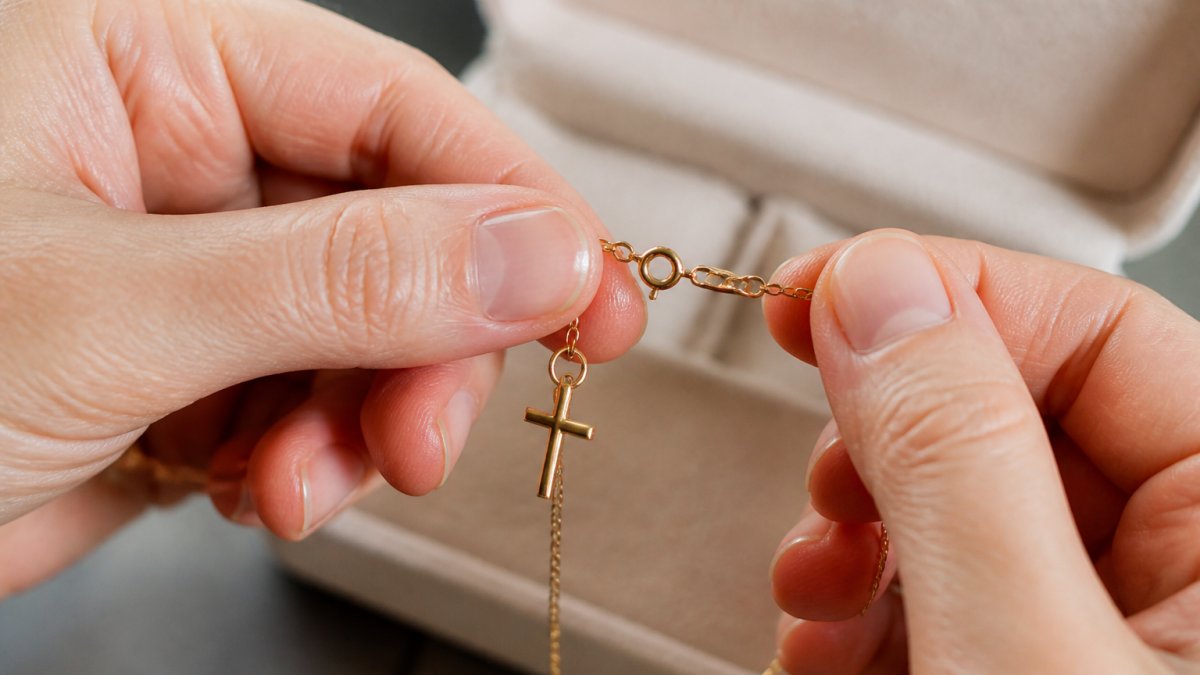
The clasp is the most-used part of a necklace or bracelet, opening and closing hundreds of times over the years. A weak clasp is the most common reason a piece breaks. Rank your options by security:
- Lobster clasps: The most secure common option. A spring-loaded trigger locks the loop firmly closed. Best for pieces meant to last decades.
- Box clasps: Secure and elegant, with a box-shaped mechanism that clicks into place and often includes a safety catch. Good for formal pieces and bracelets.
- Spring ring clasps: Adequate but less secure than lobster or box clasps. Acceptable for lighter pieces that will not be tugged.
Whatever the type, test it. Open and close the clasp several times. It should snap shut with a clear click and resist a gentle pull. A clasp that opens under light tension will fail at the worst moment.
Examine the chain, links, and solder points
Run your fingers along the chain. It should feel smooth with no rough spots or sharp edges. Then look closely at how the links are joined:
- Soldered links are fused shut at a tiny seam. They cannot pull apart under normal wear and are the mark of a well-built chain.
- Open or looped jump rings are simply bent closed. They can work open over time, especially on a piece a child handles.
- Check the pendant attachment. The bail, the loop that holds the pendant to the chain, should be substantial and closed, not a thin open loop that can bend.
Weigh repairability and coverage before you buy
Durability isn't only about whether a piece breaks; it's about whether it can be fixed. Before purchasing, ask three questions:
- Can this piece be resized or repaired? Solid metal chains and pendants can usually be re-soldered, re-clasped, or resized by a jeweler. Thin plated pieces often cannot be repaired economically.
- What does the warranty cover? Look for coverage on clasp failure, link separation, and manufacturing defects, and note the length of the coverage period.
- What is the return policy? Confirm the window and whether engraved or personalized pieces are excluded.
A piece backed by a clear warranty and a repair path is better long-term value than a cheaper piece with no coverage.
At Celestial Ringdom, every piece is inspected for construction quality before it ships.
Long-Term Care and Storage to Preserve Your Keepsake
Once you've selected quality baptism jewelry, proper care keeps it beautiful for decades. Care is part of the durability decision: a well-made piece stored badly will tarnish and scratch, while a modest piece cared for well will outlast it.
Gold: minimal care, a few rules
Solid gold does not tarnish or corrode, so care is simple:
- Clean occasionally with warm water, a drop of mild dish soap, and a soft cloth. Rinse and pat dry.
- Avoid chlorine, salt water, and harsh household cleaners, which can dull the surface over time.
- Remove before swimming, bathing, and exercising.
White gold is usually rhodium-plated for a bright finish. That plating can wear over years of wear and may need re-plating by a jeweler to restore its color, a normal maintenance step, not damage.
Sterling silver: active care prevents tarnish
Sterling silver tarnishes when it reacts with air and moisture. Tarnish is a cosmetic surface change, not structural damage, and it is reversible:
- Store silver in an airtight container or an anti-tarnish bag to slow tarnish between wears.
- Clean with a soft silver polishing cloth for light tarnish. For heavier tarnish, use a gentle silver polish and rinse thoroughly.
- Never use abrasive scrubbers or toothpaste, which scratch the surface.
Storage that protects every piece
- Keep pieces separate so they do not scratch each other. A jewelry box with a soft lining works well.
- For long-term storage, wrap each piece in acid-free tissue paper and keep it in a dry, cool place.
- Store chains clasped or laid flat to prevent tangling and kinking.
Gemstones and enamel need extra gentleness
If your piece includes gemstones or enamel work, avoid extreme heat and sudden temperature changes, which can cause cracking. Clean around stones with a soft brush rather than soaking, and have a jeweler check settings periodically.
Plan for repair, not replacement
Even well-cared-for jewelry can need service. A broken clasp or loosened link is a repair, not a reason to replace the piece. Before you buy, confirm the piece can be repaired and what the warranty covers, that's the difference between a lifetime keepsake and one you replace in a few years.
Key Takeaway
Treat care and repairability as part of the buying decision, not a chore after the fact. A piece with a clear care routine, a repair path, and warranty coverage is the most durable choice you can make.
We back every piece with a 25-year warranty and a 100% money-back guarantee, so you can feel confident investing in a piece that will truly last.
Frequently Asked Questions
What materials are best for durable baptism jewelry?
Solid gold (14k or higher), sterling silver, and platinum are the most durable options for baptism jewelry. Solid gold resists tarnish and corrosion, while sterling silver requires regular care but remains a classic choice. Avoid gold-plated or gold-filled pieces if you want a keepsake that lasts decades without the plating wearing away. Look for pieces marked with purity stamps like '14k' or '925' (sterling silver standard).
How can you tell whether a baptism necklace gift is made to last?
Check for soldered chain links rather than stamped or glued connections, which indicate quality craftsmanship. Examine the clasp mechanism, it should feel secure and well-constructed, not loose or flimsy. Verify the metal purity through hallmarks, and inspect for even finishing without rough edges or visible defects. Ask about warranties or guarantees; reputable makers often stand behind their work with protection plans that cover repairs or replacements.
Is sterling silver or gold better for baptism jewelry?
Both have advantages. Solid gold offers superior tarnish resistance and requires minimal maintenance, making it ideal for heirloom pieces worn frequently. Sterling silver provides a classic, timeless aesthetic and is often more affordable, though it requires periodic polishing to maintain its shine and prevent tarnish. For a baptism jewelry keepsake, choose based on your budget and willingness to perform occasional care, either metal can last a lifetime with proper handling.
How should you care for baptism jewelry to keep it durable?
Store jewelry in a dry, cool place away from humidity and direct sunlight to prevent tarnish and discoloration. Clean gently with a soft cloth or mild soap and lukewarm water, avoiding harsh chemicals. For sterling silver, use specialized silver polish occasionally. Remove jewelry during swimming, bathing, or exercise to minimize exposure to chlorine and sweat. Have clasps and chain links inspected annually by a jeweler to catch wear before it becomes a problem.
Selecting durable baptism jewelry means thinking beyond the ceremony. You're choosing a piece your child might wear for decades, at confirmations, graduations, and beyond. Focus on solid metals like 14k gold or sterling silver, inspect construction quality and clasp security, and commit to proper care. At Celestial Ringdom, we design every piece with this longevity in mind. Explore our collection of durable baptism jewelry and find the perfect keepsake that will be treasured for generations.