

October16
How to Prevent Jewelry From Turning Skin Green
Table of Contents
- Why Does Jewelry Turn Skin Green
- Is Jewelry That Turns Skin Green Safe to Wear
- How to Keep Rings From Turning Fingers Green
- Does Clear Nail Polish Prevent Jewelry From Turning Skin Green
- Proper Jewelry Care and Maintenance
- Metals That Won't Turn Your Skin Green
- Conclusion
- Frequently Asked Questions
Last Updated: October 16, 2026
Why Does Jewelry Turn Skin Green
Learning how to prevent jewelry from turning skin green is one of the most common concerns we hear at Celestial Ringdom. The culprit isn't always what you'd expect, and understanding the science behind it helps you prevent the problem entirely.
The green discoloration happens when certain metals react with your skin. The most common cause is copper or copper-containing alloys. When these metals come into contact with moisture, sweat, and the natural oils on your skin, a chemical reaction occurs. This creates copper compounds that stain your skin green or blue-green.
It's not dangerous. It's not an allergic reaction in most cases. It's simply a chemical process that leaves a temporary mark.
The Role of Copper and Copper Alloys
Copper is everywhere in affordable jewelry. Many rings, bracelets, and necklaces contain brass (copper mixed with zinc) or bronze (copper mixed with tin). These alloys are popular because they're inexpensive and easy to work with.
When copper oxidizes, it creates a patina. That's the greenish or bluish coating you see on old pennies and weathered statues. On your skin, the same process happens in miniature. The copper in your jewelry reacts with oxygen and moisture, forming copper carbonate compounds.
These compounds transfer to your skin, leaving a temporary stain. The longer you wear the jewelry without cleaning it, the more likely staining becomes.
Higher-quality metals like solid gold, platinum, and stainless steel contain little to no copper. That's one reason they're more expensive, they simply don't cause this problem.
How Moisture, Sweat, and Skin Chemistry Interact
Your skin is acidic and moist. That's the perfect environment for metal oxidation. Every time you shower, swim, or sweat, you're creating the exact conditions that trigger the chemical reaction.
Sweat contains salts and acids (Physiology of sweat gland function). These accelerate oxidation. If you wear copper-containing jewelry while exercising or in humid weather, the staining happens faster.
Even lotions, cosmetics, and soap can contribute. These products sit on your skin and create a barrier that traps moisture against the metal. The longer moisture stays in contact with the jewelry, the more oxidation occurs.
Your individual skin chemistry matters too. Some people's skin is more acidic than others. Some people sweat more. These factors determine how quickly staining appears on your particular skin.
Water is the biggest culprit. Showering with jewelry on, swimming, or even washing your hands while wearing rings dramatically increases the risk. Chlorine in pools accelerates the process even more.
Is Jewelry That Turns Skin Green Safe to Wear
The short answer is yes. In most cases, jewelry that turns your skin green is perfectly safe. The staining itself is harmless. But it's important to understand the difference between discoloration and an actual allergic reaction.
Harmless Staining vs. Allergic Reaction
Green staining is a cosmetic issue, not a health issue. The copper compounds that cause the discoloration don't enter your bloodstream. They sit on the surface of your skin and wash off with soap and water.
An allergic reaction is different. If you're allergic to nickel or another metal in your jewelry, you'll notice:
- Itching or burning sensation under the jewelry
- Red, inflamed skin
- Swelling or blistering
- A rash that persists even after you remove the jewelry
These symptoms indicate contact dermatitis, not simple staining. If you experience any of these, stop wearing that jewelry and consider getting tested for metal allergies.
The green stain itself doesn't itch. It doesn't burn. It doesn't cause inflammation. It simply looks unattractive until you wash it off.
Many people confuse the two because both involve discoloration. But the mechanism is completely different. Staining is chemistry. Allergic reactions are your immune system responding to a substance it recognizes as a threat.
If you've been wearing jewelry that turns your skin green for months without any itching or irritation, you're safe. You simply need a better prevention strategy.
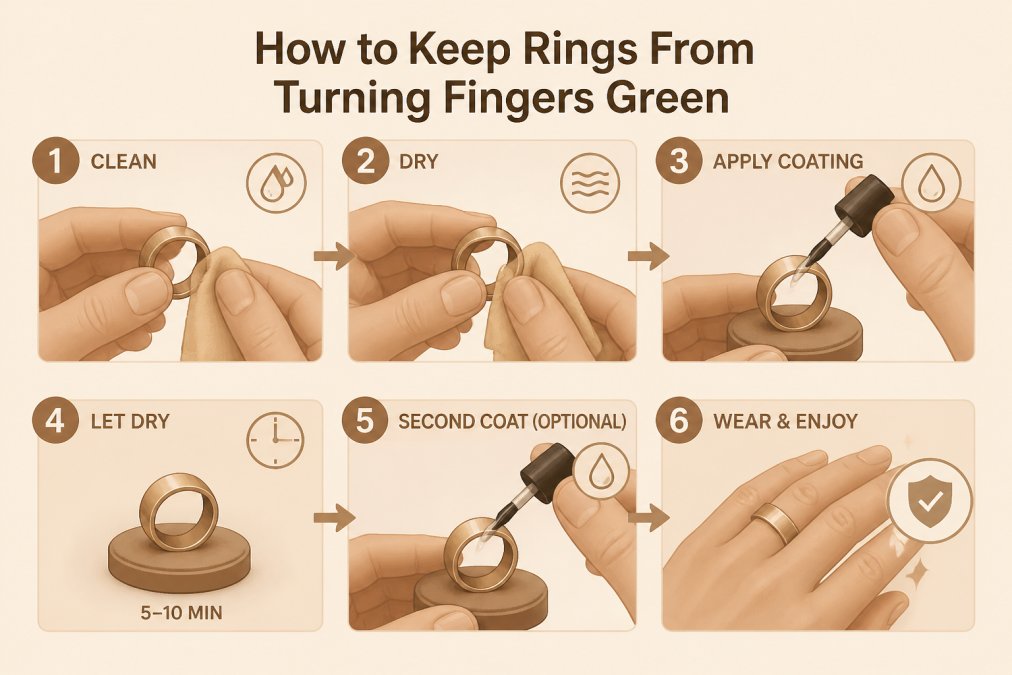
How to Keep Rings From Turning Fingers Green
Understanding how to prevent jewelry from turning skin green is straightforward. The key is creating a barrier between the metal and your skin, keeping your jewelry clean, and choosing metals that resist oxidation.
Choose Higher-Quality Metals and Solid Gold
The most reliable prevention method is wearing jewelry made from metals that don't oxidize. Solid gold, platinum, and stainless steel are your best options.
At Celestial Ringdom, we craft our CTR rings in 14K gold. Gold doesn't corrode or oxidize (usgs.gov). It won't turn your skin green no matter how much you sweat or how often you shower. The American Gem Society confirms that precious metals like gold are resistant to oxidation and safe for all-day wear.

Solid gold lasts forever. A gold ring you buy today can be worn by your grandchildren. That's why we focus on 14K gold at Celestial Ringdom, it's an investment in durability and peace of mind.
Apply a Protective Barrier Between Jewelry and Skin
If you already own jewelry that turns your skin green, a protective barrier is your fastest solution. The barrier prevents direct contact between the metal and your skin, stopping the chemical reaction before it starts.
Does Clear Nail Polish Prevent Jewelry From Turning Skin Green
Clear nail polish is the most accessible barrier method. It's inexpensive, readily available, and takes just a few minutes to apply. But it has real limitations.
How Nail Polish Works as a Temporary Solution
The bigger issue is that nail polish wasn't designed for jewelry. It's not formulated to withstand the constant moisture exposure that rings experience. Professional jewelry coatings are much more durable.
More Durable Alternatives to Nail Polish
The trade-off is always between convenience and durability. Nail polish is convenient but requires frequent reapplication. Professional coatings are durable but cost money upfront.
CTR Ribbon Bow Ring, 14K #273 →
Proper Jewelry Care and Maintenance
Regular cleaning prevents staining and keeps your jewelry looking beautiful. A simple routine takes just minutes and dramatically reduces the risk of discoloration.
Cleaning Your Jewelry Regularly
Clean your jewelry at least once a week. More frequently if you wear it constantly or in humid conditions.
The process is simple:
- Use warm water and mild dish soap
- Gently scrub with a soft toothbrush or soft cloth
- Pay special attention to crevices where moisture can hide
- Rinse thoroughly with clean water
- Dry completely with a soft cloth
For gold jewelry, this routine is safe and effective. Avoid harsh chemicals or abrasive scrubbers that can scratch the surface.
If your jewelry has gemstones, check whether they're sensitive to water. Some stones like opals or pearls require gentler care. For most common gemstones like diamonds or sapphires, warm soapy water is fine.
A silver polishing cloth works well for keeping gold rings looking bright. Gently wipe the ring to remove any tarnish or buildup. This takes just a few seconds and prevents oxidation.
Remove your jewelry before showering, swimming, or exercising. This simple habit prevents most staining problems. The less time your jewelry spends in contact with moisture, the better.
Removing Green Stains From Your Skin
If you already have green stains on your skin, don't panic. They wash off easily and cause no lasting damage.
Soap and water remove most stains. Simply wash your hands thoroughly with regular hand soap. The stain should fade within a few washes.
For stubborn stains, rubbing alcohol works well. Apply a small amount to a cloth and gently rub the stained area. The alcohol dissolves the copper compounds more effectively than water alone.
Lemon juice is another option. The citric acid in lemon reacts with the copper compounds and helps dissolve them. Rub the stained area with a cut lemon or apply lemon juice on a cloth.
Toothpaste also works. The mild abrasive action combined with the chemical properties helps lift the stain. Apply a small amount, gently rub, and rinse.
The stain will fade completely within a few days even without treatment. Your skin naturally sheds the outer layer of cells that contain the stain. Washing accelerates the process.
Metals That Won't Turn Your Skin Green
Choosing the right metal eliminates the problem entirely. Some metals are naturally resistant to oxidation and won't stain your skin under any circumstances.
Solid gold is the top choice. Gold doesn't oxidize or corrode. It's chemically inert, meaning it doesn't react with moisture, sweat, or skin acids. A gold ring will never turn your skin green.
Platinum is even more resistant than gold. It's extremely rare and expensive, but it's the most durable and hypoallergenic precious metal available. Platinum jewelry is an investment that lasts centuries.
Stainless steel is an affordable alternative. It's a metal alloy specifically engineered to resist corrosion. Most stainless steel jewelry won't cause staining, though some lower-grade stainless steel contains nickel, which can trigger allergies in sensitive people.
Titanium is lightweight and hypoallergenic. It doesn't oxidize and won't stain your skin. It's becoming more popular in jewelry because of its durability and modern aesthetic.
Sterling silver contains 92.5% pure silver. While silver can tarnish over time, it won't turn your skin green. The tarnish is a surface issue that cleans off easily.
Avoid brass, bronze, and copper-containing alloys if staining is a concern. These metals oxidize readily and are the primary cause of green staining.
At Celestial Ringdom, we use 14K gold for our CTR rings because it combines beauty, durability, and the assurance that your jewelry will never turn your skin green. Our CTR Heart Ring in 14K gold and CTR Ribbon Bow Ring in 14K gold are designed to last a lifetime without staining or discoloration.

Conclusion
Jewelry turning your skin green is a cosmetic issue, not a health crisis. It happens when copper-containing metals oxidize in contact with moisture and sweat. The staining is harmless and washes off easily.
The best prevention is choosing solid gold or other high-quality metals that don't oxidize. If you already own jewelry that stains, apply a protective barrier or clean it regularly to minimize the problem.
When you're ready to invest in jewelry that will never turn your skin green, Celestial Ringdom offers 14K gold CTR rings and necklaces designed to be worn for a lifetime. Our pieces come with a 25-year warranty and a 100% money-back guarantee. Explore our collection of faith-based jewelry and find a piece that reflects your commitment to your faith, without the worry of green stains.

Frequently Asked Questions
Why does my 10k gold ring turn my finger green?
10k gold contains 41.7% pure gold mixed with base metals like copper and nickel. These metals react with moisture, sweat, and skin chemistry to create oxidation, which leaves a green or dark stain on your skin. The reaction is harmless discoloration, not an allergy. Solid 14k gold (58.3% pure) or higher reduces this risk significantly because it contains less reactive base metal content.
Is it safe to wear jewelry that turns skin green?
Green staining from jewelry is usually harmless and simply a chemical reaction between the metal alloy and your skin. However, if you experience itching, redness, swelling, or a rash, you may have contact dermatitis or a nickel allergy, which requires you to stop wearing that piece. Clean the affected area with soap and warm water. If symptoms persist, consult a healthcare provider. Most green discoloration is cosmetic only and poses no health risk.
Does clear nail polish actually prevent jewelry from turning skin green?
Clear nail polish can temporarily reduce green staining by creating a barrier between the metal and your skin. However, it chips and wears away within days or weeks, especially on rings that contact water and soap. For permanent protection, choose solid gold jewelry.
How can I remove green marks from my skin after wearing jewelry?
Green marks typically fade within a few hours to a day on their own. To speed removal, wash the area with soap and warm water using a soft cloth. Rubbing alcohol or a mild abrasive like baking soda mixed with water can also help. Avoid harsh scrubbing, which irritates skin. Once removed, prevent future staining by cleaning your jewelry regularly with a soft cloth and warm soapy water, removing it before swimming or showering, and choosing higher-quality metals like solid gold.